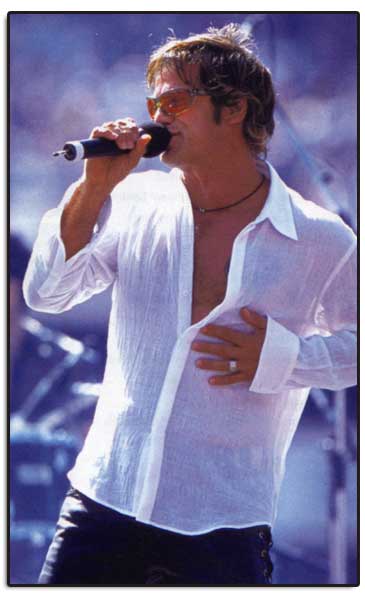
Well hello!
Thanks for looking at this issue's How To... section. We're dealing with a topic important to all musicians - running effective rehearsals. It's a topic I find can make or break a band. And it's one many people (including me) seem resistant to address proactively. Why? Well, in my case, I don't want the rest of the band to see me as trying to dominate and control the band. But I still want an effective rehearsal. The fact is, someone does need to manage the band. To control the rehearsal. And everyone needs to prepare.
Anyway, I asked some seasoned musicians to tell us what it takes to run a great rehearsal. Here are their answers.
Doug "Uncle Buck" Lloyd, sax, juggling 3 bands
What do I think it takes to run an effective rehearsal? Hummmm......
* common well understood objectives/goals
* advance preparation
* start (and finish) on time
Let me elaborate.
Goals include lots of things, like type of band (dance band/stage band/etc), type of music, style, image - those are some of the more 'strategic' goals. Goals for one rehearsal might include creating a song or two, polishing some songs, introducing a new song or two. Make sure you all agree on why you are rehearsing - each individual has his/her own reasons, of course, but the band as a whole might be preparing for a gig, preparing for a recording session, or just building on the old portfolio, or creating new original tunes. It's good to let this overriding purpose drive the rehearsal - sort of keeps things on track.
SOMEONE needs to set an agenda several days in advance
Preparation - easy one here! But seldom done, in my experience. SOMEONE needs to set an agenda several days in advance - could just be a songlist. The whole band should be informed several days before the rehearsal what will be done at the rehearsal. Each individual should use that information to prepare for the rehearsal - have their part ready! In advance. Right. Other parts of preparation include securing a place, establishing a start and stop time, making sure everyone is informed and committed, etc.
Start time - It's really hard to rehearse when everyone is not there. Being late is inexcusable. Sorry, it just is. Musos aren't known for punctuality usually, but they should be. On time for rehearsal, on time for gigs. Be there early. The start time means start PLAYING, not start setting up! Tuned and ready to go. No shit.
Musos aren't known for punctuality usually, but they should be.
Well, there are some thoughts.
As far as a personal experience, the worst I can remember is simply getting there, setting up, and then waiting, waiting, waiting, and finally getting cancelled because someone (or two) didn't show and the sob didn't even call!
The best? The first rehearsal has been a great rehearsal for me many times. It's new, it's discovery, it's exciting. Nothing specific to point to, but I can remember several groups I've been in and the very first time we got together, and it was great! It continued to be great, too, but there's nothing quite like the first time. In music, too.
Hope this helps....
Mike Kent, guitarist, 1 band
It is a great question, and I have a few thoughts. Here goes....
A productive rehearsal relies on a few key fundamental principles.
Covers
Are you playing in a cover band? There is nothing wrong with that!!!! If so, find copies of the songs you are going to play, and learn your part as well as you can. This is very important! It's all very well to play covers by simply knowing the chords, but remember, the songs you are playing are well known for the way the arrangements and the parts fit together. Never try to learn more than 4 or 5 songs in a single 4 hour rehearsal block! Remember, you're paying real money, so knowing your bit will make the rehearsal go more smoothly. Oh, and don't do what I do, which is between every song, play little bits and pieces of other famous songs. This is bound to piss off other band members.
Don't do what I do, which is between every song, play little bits and pieces of other famous songs. This is bound to piss off other band members.
Original songs
Are you doing what we all aspire to, which is play in an original band? Then work with the songwriter/songwriters in the band.
Step 1 is to never go near a rehearsal room - where you're paying for the priviledge, until you have sat for endless hours in somebody's bedroom going over the arrangements, the chords, the lyrics etc with a few acoustic guitars. Again, never aim to nail more than a few songs at each paid for rehearsal.
The difference in an original band, is to ego manage. Usually, an original band has only 1 or 2 writers. Try to massage their creativity, understanding that their songs are usually the reason you're playing with them in the first place. Try to put your own playing aside, and service the particular song you are working on with taste. Think about it this way: what if Ringo wanted to play drum solos all the way through Hey Jude? Wouldn't really work would it?
You have to learn what may be the hardest musical lesson of all... TO LISTEN TO EACH OTHER!!
Hopefully, as in a covers band, some of the parts you will play will become apparent in the lounge room. This is not always the case in a louder rehearsal room situation. Once you are playing these songs LOUD, what worked at home may not work in the live situation. Then, you have to learn what may be the hardest musical lesson of all. Forget scales, forget chord shapes, forget image and a recording contract. YOU HAVE TO LEARN TO LISTEN TO EACH OTHER!! In fact, I think this is the singular most important piece of advice for rehearsing in any situation, originals or covers aside, and I'm very sorry for shouting it, but I believe it to be so.
By way of explanation, I can only offer my own experience. I am an older fella (44), who plays in a cover band for fun. In my younger days, I played in numerous original bands, but now have a real job, and just enjoy the experience of gigging with this band without the angst of having to write the material. There are 8 of us in the band - 3 singers, drummer, bass player, keyboard player and 2 of us cursed guitar players. I had never played with another guitarist before, let alone 3 singers and a keyboard player.
My first rehearsal, I did what I said in the section under covers bands. I learnt my parts as well as I could (some 35 or so songs) and went along. Because I wasn't used to the huge personnel, I promptly overplayed. And because I'm a little bit thick, it took me a few gigs to remember the other cardinal rule I outlined in this story: I began to listen to the other players in the band, not just myself!!!! As a result, I began scaling back what I was playing, because otherwise it was getting damn messy. Suddenly, the band began to sound cleaner and nicer, and the other lovely players and singers in the band were allowed room to shine (as they do, cos they're fine players - but that's another story).
It's all about the song - not about your ability to solo or preen.
So I guess kids, what I'm trying to say is (and I know it sounds as squeaky clean as an episode of The Waltons), regardless of you situation (covers or originals), the key to successfully rehearsing is to be as thoroughly prepared as you can and support the music you are playing as well as you can. It's all about the song - not about your ability to solo or preen.
Greg Dodge, Manager of The Australian Academy of Music in Brisbane
Greg runs jam sessions for large groups on a regular basis and has lots of experience getting people involved for a fun jam. Here he gives us his advice for setting up a jam and for running a rehearsal - obviously 2 completely different things.
Jam session
If more than thirty people in the room it works (60 or 100 great!!). A white board broken up into four squares. First person writes in first square what songs they want to play (suggest two). Others add what instruments they will play or sing. Next square is filled in same with two new songs. This means when the band gets up it is rubbed out and new songs are written up and on it goes. Everyone gets a go and no one ends up 'hogging the Jam".... For a jam this big, all gear should be provided by the Jam organisers (we run these in Brisbane).
Rehearsals
Be organised before each get there. Know the songs - or have a plan to what you may jam before walking in. Lyrics - chord changes etc etc. Also works best with a Music Coach. Someone who challenges the "whole sound" of the band. To get the best out of the band....
Showing posts with label May 2005. Show all posts
Wednesday, August 18, 2010
How to... Run an Effective Rehearsal
Labels:
Doug Lloyd,
Greg Dodge,
How To....,
Issue 4,
May 2005,
Mike Kent
What is Folk Music?
By Ben Little
I am a fan of most genres of music but I must admit I did have a pre-conceived idea about folk festivals before attending the National Folk Festival in Canberra and the Port Fairy Folk Festival this year. At both festivals my eyes were opened and my horizons broadened as I witnessed on both occasions music and performers that were not easy to define.
Let me start off by giving you some definitions of the terms "folk" and "folk music."
* In Roget's Thesaurus, "folk" is described as, "regional, local, unsophisticated, primitive."
* In the Concise Oxford Dictionary of Music "folk music" is described as, "Songs of unknown authorship, passed orally from generation to generation (and often found in different parts of a country or in different countries)."
What these definitions conjure up is that folk music is traditional music and sometimes not played with much finesse. And I must admit, this is what I thought I was going to witness at a folk festival... music that was predominantly traditional and sometimes played with not much finesse.
How wrong I was!
In contrast to the definition described in Roget's Thesaurus, it was definitely NOT unsophisticated. In fact almost everything that I saw at both festivals including the "fringes" was professional, inspiring, sometimes original and always interesting. And while all of the music can nestle underneath the umbrella called "folk," I believe that the music at these festivals is far more expansive and perhaps a better name for these festivals should simply be... music festivals. Let's start with the festivals themselves then we will talk about the music...
Perhaps it was my "flower power" upbringing, or perhaps it was my inherent love for carnivals and festivals, but I felt quite at home upon arrival at the National Folk Festival in Canberra in 2003. And the same feeling happened again this year at the Port Fairy Folk Festival in March. Both festivals had a relaxed atmosphere and a sense of fun to be had.
What can you expect to see at a folk festival?
There are food stalls, clothing stalls, arts and craft stalls and even instrument makers. Folk festivals have to be the best places on earth for hats! With program in hand, you can find workshops, lectures and classes ranging from dance to singing to playing an instrument. Outside the main performing venues you can also find all kinds of comedic, musical and theatrical acts. All this happens pretty consistently throughout the day and night.
There are also fringe performers, which can be seen at various places outside the main stages. This is a growing part of the festival circuit and a part not to be dismissed. In fact, some people never actually make it into the festivals themselves, instead preferring to remain on the fringe and to soak up the atmosphere around the festival. Certainly there's good music both in and out of the gates.
There are lots of people around, but, because there are different acts to see at different venues at the same time, it rarely seems over-crowded. For more popular acts, all it takes is a little bit of planning and you can get a good seat. And the cool thing is... you always have a choice. Once you are inside the festival, you can go anywhere at any time. So if a particular act doesn't tickle you're fancy, you can take off to another stage and watch something else (with a coffee and a kebab if you so choose!).
Quality music, great performers, and more than just "folk"
At the National Folk Festival in Canberra, one of the bands I saw was a 3-piece band called 'Ember Swift' from Canada. They left me completely breathless. Not only because they were indefinable and original, but because they were so good! The singer, Ember Swift, is a great guitar player. They went beyond what I think of when I think of "folk" music.
No, it goes way beyond "folk." I saw singer songwriters, bluegrass bands, country bands, blues bands, choral groups, guitarists, fiddlers, jazz tinged acoustic rock, pop, contemporary pop and just about anything that can be described as music! I saw groups from Russia, China, Scotland and South America, playing traditional styles from their own countries.
At the Port Fairy Folk Festival we saw 'My Friend the Chocolate Cake' headed by the smooth vocals of David Bridie. Apart from the addition of a violin, I would not really describe this as folk music; they had what I would describe as a pop to contemporary sound. Then there was Bella, who brought contemporary country to the stage, while the Waifs played good solid rock. Perhaps the addition of a harmonica or a fiddle or an acoustic guitar conjures up the word "folk?"
Quality!
Now apart from the notion that a lot of these acts cannot be completely described as folk, the other glaring fact is that everything that I saw was of an extremely high musical standard. The playing was incredible. Amazing guitar players, riveting fiddlers and beautiful singers. And on top of all of that, great songwriting!
If you are a classical, jazz or even blues snob, I guarantee that watching the acts at these festivals would change your perception of folk music.
Treasures Found and Shared
Perhaps one of the best things about going to a folk festival is the discovery of artists and songs you never knew existed. Some of the artists have been recording for many years but have never been heard on the radio. The festivals give us exposure to those artists and, when we find performances we like, an opportunity to buy their records and take the music home.
So, in most instances, we know who the authors are, we pass the music from generation to generation through recordings, and through those recordings and festivals we are able to spread the music well beyond their local/regional roots. Check out a folk festival - you'll see that there's a lot more to them then the name might imply....
Gnome Links:
I am a fan of most genres of music but I must admit I did have a pre-conceived idea about folk festivals before attending the National Folk Festival in Canberra and the Port Fairy Folk Festival this year. At both festivals my eyes were opened and my horizons broadened as I witnessed on both occasions music and performers that were not easy to define.
Let me start off by giving you some definitions of the terms "folk" and "folk music."
* In Roget's Thesaurus, "folk" is described as, "regional, local, unsophisticated, primitive."
* In the Concise Oxford Dictionary of Music "folk music" is described as, "Songs of unknown authorship, passed orally from generation to generation (and often found in different parts of a country or in different countries)."
What these definitions conjure up is that folk music is traditional music and sometimes not played with much finesse. And I must admit, this is what I thought I was going to witness at a folk festival... music that was predominantly traditional and sometimes played with not much finesse.
How wrong I was!
In contrast to the definition described in Roget's Thesaurus, it was definitely NOT unsophisticated. In fact almost everything that I saw at both festivals including the "fringes" was professional, inspiring, sometimes original and always interesting. And while all of the music can nestle underneath the umbrella called "folk," I believe that the music at these festivals is far more expansive and perhaps a better name for these festivals should simply be... music festivals. Let's start with the festivals themselves then we will talk about the music...
Perhaps it was my "flower power" upbringing, or perhaps it was my inherent love for carnivals and festivals, but I felt quite at home upon arrival at the National Folk Festival in Canberra in 2003. And the same feeling happened again this year at the Port Fairy Folk Festival in March. Both festivals had a relaxed atmosphere and a sense of fun to be had.
What can you expect to see at a folk festival?
There are food stalls, clothing stalls, arts and craft stalls and even instrument makers. Folk festivals have to be the best places on earth for hats! With program in hand, you can find workshops, lectures and classes ranging from dance to singing to playing an instrument. Outside the main performing venues you can also find all kinds of comedic, musical and theatrical acts. All this happens pretty consistently throughout the day and night.
There are also fringe performers, which can be seen at various places outside the main stages. This is a growing part of the festival circuit and a part not to be dismissed. In fact, some people never actually make it into the festivals themselves, instead preferring to remain on the fringe and to soak up the atmosphere around the festival. Certainly there's good music both in and out of the gates.
![]() |
| This is an aerial shot of beautiful Port Fairy. |
Quality music, great performers, and more than just "folk"
At the National Folk Festival in Canberra, one of the bands I saw was a 3-piece band called 'Ember Swift' from Canada. They left me completely breathless. Not only because they were indefinable and original, but because they were so good! The singer, Ember Swift, is a great guitar player. They went beyond what I think of when I think of "folk" music.
No, it goes way beyond "folk." I saw singer songwriters, bluegrass bands, country bands, blues bands, choral groups, guitarists, fiddlers, jazz tinged acoustic rock, pop, contemporary pop and just about anything that can be described as music! I saw groups from Russia, China, Scotland and South America, playing traditional styles from their own countries.
At the Port Fairy Folk Festival we saw 'My Friend the Chocolate Cake' headed by the smooth vocals of David Bridie. Apart from the addition of a violin, I would not really describe this as folk music; they had what I would describe as a pop to contemporary sound. Then there was Bella, who brought contemporary country to the stage, while the Waifs played good solid rock. Perhaps the addition of a harmonica or a fiddle or an acoustic guitar conjures up the word "folk?"
Quality!
Now apart from the notion that a lot of these acts cannot be completely described as folk, the other glaring fact is that everything that I saw was of an extremely high musical standard. The playing was incredible. Amazing guitar players, riveting fiddlers and beautiful singers. And on top of all of that, great songwriting!
If you are a classical, jazz or even blues snob, I guarantee that watching the acts at these festivals would change your perception of folk music.
Treasures Found and Shared
Perhaps one of the best things about going to a folk festival is the discovery of artists and songs you never knew existed. Some of the artists have been recording for many years but have never been heard on the radio. The festivals give us exposure to those artists and, when we find performances we like, an opportunity to buy their records and take the music home.
So, in most instances, we know who the authors are, we pass the music from generation to generation through recordings, and through those recordings and festivals we are able to spread the music well beyond their local/regional roots. Check out a folk festival - you'll see that there's a lot more to them then the name might imply....
Gnome Links:
- My Friend the Chocolate Cake - http://home.mira.net/%7Emftcc/
- Ember Swift - http://www.emberswift.com/ - Just to reinforce that "folk" is too a narrow term for these festivals - on Ember's homepage it says that her music is a combination of many styles from jazz to funk and from folk to punk. See!
- Bella - http://www.bella.net.au
- The Waifs - www.thewaifs.com/
- Port Fairy Folk Festival - www.portfairyfolkfestival.com/ - Tickets usually go on sale in November for the March Festival. If you do go - make sure to go to The Stump pub and say hi to the people singing and playing in the weekend long session!
- Other Australian Music Festivals - You usually need to plan to go to a festival. Fly or drive there. Get accommodation. Take time off from work. Pick one festival to attend in the next 12 months and just make it happen! - www.theharbouragency.com/Festivals.htm
Labels:
Ben Little,
Folk Music,
Issue 4,
May 2005
Gig Review: Fred Eaglesmith & the Flying Squirrels
By Wayne Tritton
Fred Eaglesmith & the Flying Squirrels
Vic On The Park Hotel
Thursday 30/03/2005
Tonight's gig was opened by Bill Chambers, (father of Kasey, in case you were wondering), and it became immediately obvious why he is so respected both here and OS. Bill delivered a perfect opening act set; short and sharp, with a mix of old faves, some new tunes from the forthcoming album, POISON BLOOD, and a smattering of well chosen and exquisitely delivered covers from Johnny Cash, Bob Dylan, and Steve Earle. Ably accompanied by dobro player Dan Walsh from the Flying Squirrels, this set was one of good humour, great stories and great playing. I for one will definitely be checking out Bill's own shows in the future (and it gave one pause to ponder the amount of talent one family could reasonably be expected to have).
Canadian singer/songwriter/story teller Fred Eaglesmith has been to Oz a few times before, but only as a solo act. Joining him on-stage tonight for the first time here was his band, the Flying Squirrels. This is a band ANY performer would gladly sell bodily parts to have behind them. A five piece band (which didn't leave much room on the Vic on the Parks stage for the six of them), of truly accomplished multi instrumentalists, they were on target right from the word go; a perfect foil for the gravel washed vocals of Fred Eaglesmith (a bit like Steve Earle meets Bon Scott). I didn't catch all the names, but to give you an idea of the set up, on electric guitars/Dobro was the aforementioned Dan Walsh, on Mandolin/Harp, William P Bennet (at least I THINK that's what I heard when he was introduced), and then I missed all the other names, due to the enthusiastic whoops and whistles of the crowd, but there was a pedal steel/lead guitarist, a bass player and a drummer.
Fred opened the set with a blistering little mini-set of three songs leading in to each other before he stopped to say hello and tell a very funny story about the bands day at the reptile park (in fact, most of the stories tonight were very funny). As I was wiping tears of laughter away, the next section of the show shifted into top gear. From the tongue in check blues stomp of Time to get a Gun, we were ushered into the spook factor times 10 of Share Cropping, then on to the heart breaking I still look for you in Crowds from the new album DUSTY.
I HAVE to mention the Squirrels' performance during Share Cropping, because they were simply astonishing. First came the mandolin solo, then the dobro solo, then the pedal steel solo, then it was back for a harp solo, then Dan Walsh swapped the dobro for the electric, then the pedal steel player swapped to HIS electric, and then the crowning glory: a DUAL harp/slide mandolin solo from William P. I know this sounds a bit 70's art rock, but it was spellbinding.
The rest of the almost two hour show just maintained the standard established from the outset. Fred Eaglesmith is possibly one of the best storytellers I've ever had the joy to watch, and he was in fine form, dealing with hecklers, "There's six of us up here buddy. You think I got a band for the musicians? We'll just come on down and beat the crap outta ya." To the fan down the front smoking, "It's never a good idea to blow smoke on the band, cause you're killing them, and when they're dead your gonna have to go back to your old Back Street Boys records." Maybe you had to be there.
A consummate performer, Eaglesmith had us crying with laughter at a story, only to have us crying for real as the song unfolded. As I mentioned, this set went for almost two hours, with Fred giving us a two song encore unaccompanied by the band, but just as powerful. Fred describes himself as "a dirty old country band from Canada," but I doubt that goes even close to describing the depth and range of his song writing abilities. No matter what type of music you're into, if you want to watch and hear something truly magical, get yourself along the next time he comes out, solo or with band. There's a truckload of info on his website, including a lot of stuff about his record label, which is called 'A MAJOR LABEL.' He tells us he called his record company that because he LOVES telling people he's signed to.... This was also the basis for a side splitting monologue about being taken out to lunch by the head of his record company, i.e. himself. Anyway, I for one am glad I made the effort to GET OUT THERE! I won't forget tonight's experience for many moons to come.
Final note: much kudos to the Vic On The Park. This has turned into a GREAT and much needed live venue for the inner city. Not only did we see two top class acts in the front room, there was also a very classy duo in the back bar playing nice chilled out tunes if you wanted to give your senses a break, or you could just head to the beer garden for some fresh air and a bit of peace and quiet in between sets. Well done guys, and thanks.
WT
Fred Eaglesmith & the Flying Squirrels
Vic On The Park Hotel
Thursday 30/03/2005
Tonight's gig was opened by Bill Chambers, (father of Kasey, in case you were wondering), and it became immediately obvious why he is so respected both here and OS. Bill delivered a perfect opening act set; short and sharp, with a mix of old faves, some new tunes from the forthcoming album, POISON BLOOD, and a smattering of well chosen and exquisitely delivered covers from Johnny Cash, Bob Dylan, and Steve Earle. Ably accompanied by dobro player Dan Walsh from the Flying Squirrels, this set was one of good humour, great stories and great playing. I for one will definitely be checking out Bill's own shows in the future (and it gave one pause to ponder the amount of talent one family could reasonably be expected to have).
Canadian singer/songwriter/story teller Fred Eaglesmith has been to Oz a few times before, but only as a solo act. Joining him on-stage tonight for the first time here was his band, the Flying Squirrels. This is a band ANY performer would gladly sell bodily parts to have behind them. A five piece band (which didn't leave much room on the Vic on the Parks stage for the six of them), of truly accomplished multi instrumentalists, they were on target right from the word go; a perfect foil for the gravel washed vocals of Fred Eaglesmith (a bit like Steve Earle meets Bon Scott). I didn't catch all the names, but to give you an idea of the set up, on electric guitars/Dobro was the aforementioned Dan Walsh, on Mandolin/Harp, William P Bennet (at least I THINK that's what I heard when he was introduced), and then I missed all the other names, due to the enthusiastic whoops and whistles of the crowd, but there was a pedal steel/lead guitarist, a bass player and a drummer.
Fred opened the set with a blistering little mini-set of three songs leading in to each other before he stopped to say hello and tell a very funny story about the bands day at the reptile park (in fact, most of the stories tonight were very funny). As I was wiping tears of laughter away, the next section of the show shifted into top gear. From the tongue in check blues stomp of Time to get a Gun, we were ushered into the spook factor times 10 of Share Cropping, then on to the heart breaking I still look for you in Crowds from the new album DUSTY.
I HAVE to mention the Squirrels' performance during Share Cropping, because they were simply astonishing. First came the mandolin solo, then the dobro solo, then the pedal steel solo, then it was back for a harp solo, then Dan Walsh swapped the dobro for the electric, then the pedal steel player swapped to HIS electric, and then the crowning glory: a DUAL harp/slide mandolin solo from William P. I know this sounds a bit 70's art rock, but it was spellbinding.
The rest of the almost two hour show just maintained the standard established from the outset. Fred Eaglesmith is possibly one of the best storytellers I've ever had the joy to watch, and he was in fine form, dealing with hecklers, "There's six of us up here buddy. You think I got a band for the musicians? We'll just come on down and beat the crap outta ya." To the fan down the front smoking, "It's never a good idea to blow smoke on the band, cause you're killing them, and when they're dead your gonna have to go back to your old Back Street Boys records." Maybe you had to be there.
A consummate performer, Eaglesmith had us crying with laughter at a story, only to have us crying for real as the song unfolded. As I mentioned, this set went for almost two hours, with Fred giving us a two song encore unaccompanied by the band, but just as powerful. Fred describes himself as "a dirty old country band from Canada," but I doubt that goes even close to describing the depth and range of his song writing abilities. No matter what type of music you're into, if you want to watch and hear something truly magical, get yourself along the next time he comes out, solo or with band. There's a truckload of info on his website, including a lot of stuff about his record label, which is called 'A MAJOR LABEL.' He tells us he called his record company that because he LOVES telling people he's signed to.... This was also the basis for a side splitting monologue about being taken out to lunch by the head of his record company, i.e. himself. Anyway, I for one am glad I made the effort to GET OUT THERE! I won't forget tonight's experience for many moons to come.
Final note: much kudos to the Vic On The Park. This has turned into a GREAT and much needed live venue for the inner city. Not only did we see two top class acts in the front room, there was also a very classy duo in the back bar playing nice chilled out tunes if you wanted to give your senses a break, or you could just head to the beer garden for some fresh air and a bit of peace and quiet in between sets. Well done guys, and thanks.
WT
Labels:
Fred Eaglesmith,
Gig Reviews,
Issue 4,
May 2005,
Wayne Tritton
An Interview with Jon Stevens
Pitt Street and Liverpool Street. That's where he told me to meet him. A pretty big intersection in the heart of Sydney. He said we'd go to the cafe. (There were at least 10 cafes in my line of sight.) I didn't want to look too keen, so I just looked around trying to see if I could see him without calling him. It was exactly 1 minute past our meeting time when my phone rang.
"Look across the street," he said. "I'm in the red hat."
I was about to meet Jon Stevens.
Researching for this interview was a pleasure. Early on, I discovered that I didn't need to say, "he was the lead singer in Noiseworks." Nope, people know who Jon Stevens is. And they love him. Not only has Jon fronted two of Australia's finest bands, Noiseworks and INXS, but he is on a great solo musical journey that he weaves into his life everyday - and he has done that throughout his career.
Over the course of the interview, I learned that there's no rest for Jon. And he doesn't seem to want any. He's constantly writing, recording, and performing - and in addition to producing good music, he's started hosting TV shows, writing for sports publications, and... movies? Well, I wouldn't put it past him.
Even before I got the interview, I did get to see Jon perform. In January, Noiseworks played at the Gaelic Club in Surry Hills, and in March, he performed at The Basement as part of his Around Australia in 8 Days tour. His recently released album is called Ain't No Life for the Faint Hearted, and when Jon performs on his own, he doesn't let the crowd down; he blends the best of Noiseworks with his own material.
So, armed with all of the songs, the experience of seeing him perform twice recently, the bio and background research read and absorbed, and some ad hoc insight from some mutual aquaintances we have, I walked across Pitt Street to meet the man. I told him that I think we all have a lot to learn from him and that's why I was there.
JS: Well it's like my record says, it ain't no life for the faint hearted. I've been doing this for a long time. And I still love it. That's the thing, I still get a lot of joy from it. Certainly performing - that's the most fun part.
TMG: I could tell that at both concerts, but in particular at the Noiseworks one, I think, to me, it looked like you were a bit in awe of the crowd reaction. Of course it hadn't been forever since you've performed, but as Noiseworks it'd been awhile. Can you tell us about that?
JS: Well it's the first time that that lineup had performed together in years, especially with Steve Balbi being back in the band. I was more an observer. I was observing the crowd, absolutely. It was like... wow. We were together a long time ago. It's amazing to still be thought of in positive terms. You always become "yesterday's hero" in the music business. I guess because we're all still working musicians - Noiseworks is not really nostalgic - it doesn't feel nostalgic to me.
TMG: No? I think it was to the crowd.
JS: Yes... the songs. But it didn't feel nostalgic playing. 'Cause everyone still can play.
TMG: No. It wasn't like that VH1 show where they get bands together after years apart. Where all of the members have one off to "day jobs" and nobody plays anymore.
JS: Right.
TMG: One of the things I noticed at the solo gig at the basement was that people would just call out songs and you'd play them. Even if they called out a song that you might have ended with, it was like you thought, "Well, I was going to do it anyway, might as well do it now."
JS: Yeah, why not?
TMG: When you started putting together this album (Ain't No Life for the Faint Hearted), why did you go independent versus using a label?
Now, at this point Jon thought I was asking why he left INXS. But I'd done my research and I felt pretty confident that I knew why he'd left the band. I reckon that it went a quite bit deeper than just wanting to focus on his solo work, which was what the public announcement said. If you read his next comments carefully, I think you'll be able to read the underlying context - you'll see someone who was creatively frustrated. It's all here if you read close enough.
JS: Well, I'd just spent 3 1/2 years touring the world with INXS. And really, we played everywhere: South America, North America, Europe, UK, I mean everywhere. We were on the road for months on end. And three years went by and you think, "What happened?" The gauge for me was when I kinda realised what was going on was that we really weren't making any new music. I just kinda got bored. And when they released 5 various Best ofs or Greatest Hits....
TMG: So you weren't writing anymore?
JS: We were writing... But Andrew wasn't writing. And it's really Andrew's way or the highway - unfortunately - for everyone in the band. So it just got to the point of being bored with the whole exercise. They're still floggin' Michael (Hutchence), and, you know, give it a break. They've got me and everyone loved it. The audience loved it.
TMG: I saw you sing with INXS when I was in the US - you were doing the Olympics. We heard that INXS would be playing and we didn't know who was going to be singing. We wondered who it would be.
JS: Well, they're still wondering... (he laughs). So my last show with them was in 2003, we did a couple of months in Europe - October, November, December - our last show back here. Then a week later I wrote the CD. And then I kept writing with this friend of mine. And then I went to Fiji for 2 1/2 months. Yeah, just over 2 month - for a show, The Resort. Which was great, because I love islands and I love getting out there in the bush or whatever. So for me, after coming out of all that time with INXS, it was like, "Go to an island? Yeah, I'm there! Hosting a show? Well, I don't know if I can do it, but if you have faith in me and you're going to pay me to do it, well...."
So we wrote some more songs over there in Fiji and recorded some over there and before you know it it was done. All in a matter of 3 months. Then I took it to the States and mixed it with some cats over there.
TMG: D. Wicks gets c-writing credits throughout the album. Who is that?
JS: Dinesh Wicks is a mate of mine here in Sydney. We recorded this whole album in the front room. Anyway, I took it to an American, this guy called Neal Pogue, who works a lot with Outkast, and Dave Pensado, he's a famous mixer over there, great bloke. Works with all the real current stuff over there. And I just really wanted to make a contemporary sounding record - hence the rappers and stuff. I just wanted to see what it was like to bring it into the now and try some different shit, you know? And everyone's like, that doesn't sound like Noiseworks, and I'm, like, of course not.
TMG: One of the things I noticed on the website is that it's described as R&B. I describe it more as a blend of R&B with Hip Hop - that sort of brings it into the now. One of my favourite interviews is with Tom Jones and he says that the reason he stays so hip is that he never stopped listening to the music that's hot "now" - to what's playing on the radio now. Is that what keeps you current?
JS: It's my kids. They're a really good gauge for me. 'Cause you know they love all the hip hop stuff and the R&B stuff. And so I'll play them ideas that I come up with and they'll say, "Yeah, great dad," or "Come on, dad." So there's a lot of that going on.
TMG: I want to do the same thing for The Metro Gnome - to get kids, teenagers, involved in the writing and the content selection. To make it more youthful and current.
JS: Absolutely. Take Scrub; I'm just starting to get into Scrub. And my son, my 11 year old son, has probably been playing them for months and months and months. And I've probably heard it that long too, 'cause my kid's always playing music. So, I've just discovered Scrub, but my kid's been onto them for months.
OK - I was about to enter a zone that I hoped wouldn't make Jon clam up - everything was going so well at this point. But I had a feeling that Jon wouldn't be happy about the success of his most recent record. I knew that I listened to the radio a lot and that I hadn't heard much about Jon Stevens. So I started to ask questions about how things were going promoting the record. I didn't need to worry - Jon didn't clam up when I asked how things were going - he told it like it is.
TMG: Did you find, in changing what the public and the radio perspective might be, what they expected from you, their ideas on what is "Jon Stevens," that you got the reaction that you wanted for this CD?
JS: Oh no, not at all. Unfortunately radio here is.... See when I made this record, I had my fingers crossed that people would "get it" here, but if they don't hear it, how the hell are they going to "get it?" It's as simple as that. And I always think that records need to be international records - without the "burden" of being around for so long. 'Cause unfortunately in Australia, and this is completely the opposite from America, anyone who's had success or been around "too long," they don't have any credibility here in Australia. Which is really peculiar to Australia and it really sucks. It's a sad indictment on the attitude.
I'll protect the innocent here and not go into detail on who we talked about next. But we discussed a few artists who've been around awhile, who Jon describes as brooding people who think the world owes them something. Actually, I'm stretching the truth there, he didn't really describe them as that - he just said that he isn't one of those people.
JS: I'm motivated. I love music. I love making music. I love performing music. And I love people. I don't have to prove myself to anyone. I'm comfortable in my own skin, you know?
TMG: So, if you're not getting the traction you want here in Australia, what are you doing to promote the CD to the global market?
JS: Well, we've been taking it out to the media and have interest in Germany and the UK and a couple of other places, but to me, it's like this: actions speak louder than words.
Hmmm, that was interesting, but it gets better....
TMG: Are you onto the next project already, then?
JS: Fuck yeah. Absolutely. But I love this record and I want to do everything I can to make it successful. The hardest hurdle here in Australia is radio. For instance, I've just re-edited the front of the single Light my Fire. 'Cause MIX wouldn't play it because it has a rap in the front. They said, "We'll play it, but you've gotta take the rap out of the front." So now they're dictating what you have to record. And I feel like I've got no choice. So I took it out. And I deliver it to them and then they say that they're not going to play it anyway. It's bullshit. Hopefully they'll stick to their word and play it, but Triple MMM, you know, they said, "Let's do a Noiseworks gig." Part of the deal was that they'd put my record on. They wanted this in one hand [Noiseworks to play] and we wanted this in the other [Triple M to play Jon's record]. And we came to the party. And as soon as they got theirs, they stiffed me. They lied. Personally, I can't deal with people like that. These are people in seriously powerful positions.
In America, people just revere their successful people in every field. They respect it, you know? And they're encouraged - young people are encouraged to be successful. Whereas here, you're encouraged to not be too successful. And not to be perceived to be successful. Because if you're seen to be successful then they pull you down.
TMG: Isn't New Zealand different to that again?
JS: It's a different attitude over there. Locals get supported. But it's so small. A lot of great talent has come out of there and continues to come out of there - it's amazing. The film industry is huge. For a little country of 3 - 3 1/2 million people it's not doing too bad.
TMG: And they don't play half bad rugby either.
JS: But for me, I've been here 24 years, and my wife's Australian, my kids are Australian. I consider myself to be a New Zealander first and foremost, but I consider myself to be an Australian, too. Still to this day, I get asked, "What team do you barrack for?" And I just laugh as I tell them that I'm there for the All Blacks. It's my origin - my country of origin. Is this a test here? Where are your parents from? 'Cause whether your first generation or second generation or third generation, we're all immigrants here (in Austalia). I'm just a first generation immigrant.
TMG: Do you get out and see a lot of music?
JS: I went out to see REM the other night.
TMG: And was it good?
JS: No, it was shithouse
TMG: Really? Where'd they play?
JS: At the Entertainment Center.
TMG: Oh, the "Empty Container Centre." Was the sound the problem?
JS: Not really. I've done a lot of gigs there. Played a lot of times. And it's fine. If you're on a stage and you're doing your thing and you've got an audience in front of you - you'd better make that audience a part of what you're doing. They paid to be there. You owe it to them - when they leave they should thinking "That was unbelievable, I had a great night!"
TMG: And you didn't think that?
JS: No - they were just going through the motions - they didn't give a fuck. You know, for a man who's got a lot to say, he didn't really say jack shit. He played 3-4 songs and them mumbled something and then started playing. And I'm right there, I can see what's going on. And maybe you get tired, maybe you're having a bad night. And maybe there's some tension with the band, but you don't take it on stage, you just don't. You owe it to the fans to bleed every night.
TMG: I haven't seen you often enough to comment on this, but when you're on a tour, how scripted is the banter between songs? Do you script what you're going to say?
JS: Sometimes I say stuff, but not exactly in the same way. And that's only because as you do more gigs you find what sort of things people connect with. And it's good, but when you find you're repeating yourself, well, you change it. I'm pretty loose. I go with the flow. And I try to be aware of what's going on out there. You have to make it feel like they're part of something.
TMG: Now that's something that no matter what level of skill you have that our readers should take away. Embrace the audience. One of the things all performers have to be able to do is to create that feeling with their audience. To create an emotional connection with the audience. You've got to overcome being nervous and perform.
JS: And you know the only way to do it is to do it. You know, people always ask me if I get nervous. And I do sometimes. But, generally I always say to myself, "Fuck, I'm here. I chose to do this. I can't get out of it. Fuck it. Have a drink and have a good time." 'Cause I want to have a good time.
TMG: Well, that's a brilliant attitude as well - you're there to have fun.
At that point Jon's manager, Ben Elias, come over to the table to ask how we were doing. He sat down and joined us.
TMG: So what's next?
Ben Elias: Movies.
TMG: Tell me about this Woodstock thing that you're doing up in Brisbane. It's a great line up. Is it you or Noiseworks?
JS: Me. All my stuff.
TMG: Great.
JS: You going?
TMG: I want to. It looks like a great line up.
BE: He's top billing.
JS: Really? I don't even know who's playing.
BE: Well, you're the top biller.
TMG: It's a good line-up, all OZ rock. So what else is up?
BE: Did he tell you about the Basement special.
JS: Oh yeah, the Basement gig was filmed and recorded and we're going to put it out on DVD.
TMG: Excellent. Who's going to release it?
JS: We will.
After covering the promotion of Jon's work, here was an opportunity to ask about the distribution - especially distribution over the Internet.
TMG: Oh that's a question I meant to ask you. Your website is great. All the links work, it's well maintained. Everything is current. There's lots of stuff on it and you're really honest on it. How do you see the Internet influencing the way you distribute your material?
JS: I think it's just a matter of time. I mean, you just have to look at the I-pod. Once people hear a song that they like, they just go to their computer and download it. That's why record companies are merging and everything's shrinking. Retailers will be out of business in the next, I don't know, maybe 10 to 20 years. It's changing so fast. The problem is this file sharing.
TMG: How will you, personally, start to use it for your distribution? Will you start to sell individual songs online and take small payments?
JS: Yes.
TMG: Will you do that through your own website or through large sites like BigPond?
JS: I think we're looking at it all.
BE: We're in negotiations with BigPond as we speak regarding that. They want to get right behind it. They saw Jon's performance at the Basement, and they want to do a lot more with Jon. And we're very interested in doing some work with BigPond. They're the animals of the industry, and they want to get associated with big names. And that's why it's looking very good for Jon in that area. And that is the future isn't it? That's why you're on it. You're making a living out of it.
TMG: Yeah, that's why I'm there. And that's why The Metro Gnome will continue to grow and develop into an online resource to promote business to business activities for the music industry. Our intention is to expand into a site that enables artists to get access to the guts of the industry and virtually eliminate the "who you know" to get heard. It should be more about what you do and how you sound. The Internet enables people to explore the smallest of niches. And Internet radio will change everything again. It will level the playing field and enable the music community to grow instead of shrink.
BE: Did you mention Olivia?
JS: Oh yeah.
BE: Olivia Newton-John holds a Breast Cancer fundraiser each year and she personally invites her favourite artists to perform. And she's asked Jon to be a part of it.
JS: She's wonderful; I've known her for years.
TMG: Is that in Sydney?
JS: Melbourne.
FYI, further research hasn't turned up much in the way of information on this event. I'm sure Jon's website will have information on it as the date approaches.
TMG: And what about recording?
JS: I'm always doing stuff.
BE: Have you got the new album?
TMG: Yep, I've even gotten it signed.
JS: It's just getting it on the bloody radio.
TMG: One last question for you. About songwriting. How do you do it? How do you get in the zone?
JS: I can be anywhere. I just pick up an instrument and start playing. That really instantly puts me in the zone. And I'll fiddle around...
BE: The last one he wrote.... You woke up at 3:00 in the morning and had this thing and wrote it down. Last night he recorded it. There you go.
TMG: Did you write down the lyrics or did you play the chords? How do you write songs?
JS: No. I actually just dreamed it. And half the lyrics were there when I woke up. I actually forgot about it until we started talking about something. And I thought, "I had a dream about that." And it came back to me. And we tweaked it and recorded it.
BE: It's written and recorded - so watch out in this space.
TMG: I will.
Ben left us to go do something else and Jon thought for a minute about how he does write songs.
JS: You know, sitting down writing songs.... I'm not a trained musician. I've never been taught. But I can sit down in front of any instrument and write something. And I don't know where that comes from.... I don't know. I don't actually question it too much. I just go with the flow and get into the feeling of whatever it's making me feel like. If it's a sad song or it's an upbeat song or whatever. And generally I just scat and jam over it. And now with all the years of recording experience that I've had, I hear everything. I hear every little instrument and what they're doing and what they need to do. You know?
TMG: How do you get that across to the other musicians?
JS: You just tell them. The problem is if they don't want to play ball. And they go, "No I want to try it this way." Then it becomes a compromise. But you have to be able to compromise if you want to be working with other people. And that's cool. The object is to get the best out of the song. To get the best out of the ideas. So you need to try every idea. And the one that's right will be the one that's right. You'll know it in the end.
Jon really lives the GET OUT THERE! motto of ours. Music is a priority in his life because it is part of who he is. It's his chosen profession is one he is committed to. He is passionate about making his audience happy, passionate about staying fresh and not scripting his performances, and passionate about writing. He doesn't use his family as an excuse - instead he molds his life to enable family and music - which for him is his family and career. He needs to work - and when he talks about this, it doesn't feel like it's about the money - it's about making music and letting his creativity flow.
JS: I'm actually really looking forward to getting out there and playing a whole lot more. You know, I spent all those years playing with INXS touring the rest of the world and not really doing much here. 'Cause they wouldn't do it. So I'm planning to go right round Australia for a few months with the acoustic set up and just go to every small town and play. To have some fun.
TMG: At the Gaelic Club you talked about how the music scene's changed from how it used to be, how Noiseworks used to play to crowds like that 5 nights a week. Do you want to do that anymore?
JS: Yeah, I really want to go to all of those places. I mean, Noiseworks - we played everywhere. That was part of the fun of being in the band. Going to different places....
TMG: But with kids and a wife and a life at home....?
JS: Yes, they're used to me being away and it's just something that I need to do. Especially with this new record. This is the first time I have done the acoustic thing at the show. I've really enjoyed that - the spontaneity of it, the looseness of it, and the interaction. That's when you have the most fun. You can't script it - that's when it becomes fuckin' boring.
TMG: When will you announce the dates for those shows?
JS: In the next couple of weeks.
I could have talked to him for hours. He was genuine. And really committed. He signed the CD that I brought. At the end he wrote "P.S. Play Loud!" And I'm pretty sure that's the way he lives his life. That's why we all know who Jon Stevens is. And that's why we'll keep hearing more and more coming from him.
Gnome Links:
"Look across the street," he said. "I'm in the red hat."
I was about to meet Jon Stevens.
Researching for this interview was a pleasure. Early on, I discovered that I didn't need to say, "he was the lead singer in Noiseworks." Nope, people know who Jon Stevens is. And they love him. Not only has Jon fronted two of Australia's finest bands, Noiseworks and INXS, but he is on a great solo musical journey that he weaves into his life everyday - and he has done that throughout his career.
Over the course of the interview, I learned that there's no rest for Jon. And he doesn't seem to want any. He's constantly writing, recording, and performing - and in addition to producing good music, he's started hosting TV shows, writing for sports publications, and... movies? Well, I wouldn't put it past him.
Even before I got the interview, I did get to see Jon perform. In January, Noiseworks played at the Gaelic Club in Surry Hills, and in March, he performed at The Basement as part of his Around Australia in 8 Days tour. His recently released album is called Ain't No Life for the Faint Hearted, and when Jon performs on his own, he doesn't let the crowd down; he blends the best of Noiseworks with his own material.
So, armed with all of the songs, the experience of seeing him perform twice recently, the bio and background research read and absorbed, and some ad hoc insight from some mutual aquaintances we have, I walked across Pitt Street to meet the man. I told him that I think we all have a lot to learn from him and that's why I was there.
JS: Well it's like my record says, it ain't no life for the faint hearted. I've been doing this for a long time. And I still love it. That's the thing, I still get a lot of joy from it. Certainly performing - that's the most fun part.
TMG: I could tell that at both concerts, but in particular at the Noiseworks one, I think, to me, it looked like you were a bit in awe of the crowd reaction. Of course it hadn't been forever since you've performed, but as Noiseworks it'd been awhile. Can you tell us about that?
JS: Well it's the first time that that lineup had performed together in years, especially with Steve Balbi being back in the band. I was more an observer. I was observing the crowd, absolutely. It was like... wow. We were together a long time ago. It's amazing to still be thought of in positive terms. You always become "yesterday's hero" in the music business. I guess because we're all still working musicians - Noiseworks is not really nostalgic - it doesn't feel nostalgic to me.
TMG: No? I think it was to the crowd.
JS: Yes... the songs. But it didn't feel nostalgic playing. 'Cause everyone still can play.
TMG: No. It wasn't like that VH1 show where they get bands together after years apart. Where all of the members have one off to "day jobs" and nobody plays anymore.
JS: Right.
TMG: One of the things I noticed at the solo gig at the basement was that people would just call out songs and you'd play them. Even if they called out a song that you might have ended with, it was like you thought, "Well, I was going to do it anyway, might as well do it now."
JS: Yeah, why not?
TMG: When you started putting together this album (Ain't No Life for the Faint Hearted), why did you go independent versus using a label?
Now, at this point Jon thought I was asking why he left INXS. But I'd done my research and I felt pretty confident that I knew why he'd left the band. I reckon that it went a quite bit deeper than just wanting to focus on his solo work, which was what the public announcement said. If you read his next comments carefully, I think you'll be able to read the underlying context - you'll see someone who was creatively frustrated. It's all here if you read close enough.
JS: Well, I'd just spent 3 1/2 years touring the world with INXS. And really, we played everywhere: South America, North America, Europe, UK, I mean everywhere. We were on the road for months on end. And three years went by and you think, "What happened?" The gauge for me was when I kinda realised what was going on was that we really weren't making any new music. I just kinda got bored. And when they released 5 various Best ofs or Greatest Hits....
TMG: So you weren't writing anymore?
JS: We were writing... But Andrew wasn't writing. And it's really Andrew's way or the highway - unfortunately - for everyone in the band. So it just got to the point of being bored with the whole exercise. They're still floggin' Michael (Hutchence), and, you know, give it a break. They've got me and everyone loved it. The audience loved it.
![]() |
| Jon with INXS |
JS: Well, they're still wondering... (he laughs). So my last show with them was in 2003, we did a couple of months in Europe - October, November, December - our last show back here. Then a week later I wrote the CD. And then I kept writing with this friend of mine. And then I went to Fiji for 2 1/2 months. Yeah, just over 2 month - for a show, The Resort. Which was great, because I love islands and I love getting out there in the bush or whatever. So for me, after coming out of all that time with INXS, it was like, "Go to an island? Yeah, I'm there! Hosting a show? Well, I don't know if I can do it, but if you have faith in me and you're going to pay me to do it, well...."
So we wrote some more songs over there in Fiji and recorded some over there and before you know it it was done. All in a matter of 3 months. Then I took it to the States and mixed it with some cats over there.
TMG: D. Wicks gets c-writing credits throughout the album. Who is that?
JS: Dinesh Wicks is a mate of mine here in Sydney. We recorded this whole album in the front room. Anyway, I took it to an American, this guy called Neal Pogue, who works a lot with Outkast, and Dave Pensado, he's a famous mixer over there, great bloke. Works with all the real current stuff over there. And I just really wanted to make a contemporary sounding record - hence the rappers and stuff. I just wanted to see what it was like to bring it into the now and try some different shit, you know? And everyone's like, that doesn't sound like Noiseworks, and I'm, like, of course not.
TMG: One of the things I noticed on the website is that it's described as R&B. I describe it more as a blend of R&B with Hip Hop - that sort of brings it into the now. One of my favourite interviews is with Tom Jones and he says that the reason he stays so hip is that he never stopped listening to the music that's hot "now" - to what's playing on the radio now. Is that what keeps you current?
JS: It's my kids. They're a really good gauge for me. 'Cause you know they love all the hip hop stuff and the R&B stuff. And so I'll play them ideas that I come up with and they'll say, "Yeah, great dad," or "Come on, dad." So there's a lot of that going on.
TMG: I want to do the same thing for The Metro Gnome - to get kids, teenagers, involved in the writing and the content selection. To make it more youthful and current.
JS: Absolutely. Take Scrub; I'm just starting to get into Scrub. And my son, my 11 year old son, has probably been playing them for months and months and months. And I've probably heard it that long too, 'cause my kid's always playing music. So, I've just discovered Scrub, but my kid's been onto them for months.
OK - I was about to enter a zone that I hoped wouldn't make Jon clam up - everything was going so well at this point. But I had a feeling that Jon wouldn't be happy about the success of his most recent record. I knew that I listened to the radio a lot and that I hadn't heard much about Jon Stevens. So I started to ask questions about how things were going promoting the record. I didn't need to worry - Jon didn't clam up when I asked how things were going - he told it like it is.
TMG: Did you find, in changing what the public and the radio perspective might be, what they expected from you, their ideas on what is "Jon Stevens," that you got the reaction that you wanted for this CD?
JS: Oh no, not at all. Unfortunately radio here is.... See when I made this record, I had my fingers crossed that people would "get it" here, but if they don't hear it, how the hell are they going to "get it?" It's as simple as that. And I always think that records need to be international records - without the "burden" of being around for so long. 'Cause unfortunately in Australia, and this is completely the opposite from America, anyone who's had success or been around "too long," they don't have any credibility here in Australia. Which is really peculiar to Australia and it really sucks. It's a sad indictment on the attitude.
I'll protect the innocent here and not go into detail on who we talked about next. But we discussed a few artists who've been around awhile, who Jon describes as brooding people who think the world owes them something. Actually, I'm stretching the truth there, he didn't really describe them as that - he just said that he isn't one of those people.
JS: I'm motivated. I love music. I love making music. I love performing music. And I love people. I don't have to prove myself to anyone. I'm comfortable in my own skin, you know?
TMG: So, if you're not getting the traction you want here in Australia, what are you doing to promote the CD to the global market?
JS: Well, we've been taking it out to the media and have interest in Germany and the UK and a couple of other places, but to me, it's like this: actions speak louder than words.
Hmmm, that was interesting, but it gets better....
TMG: Are you onto the next project already, then?
JS: Fuck yeah. Absolutely. But I love this record and I want to do everything I can to make it successful. The hardest hurdle here in Australia is radio. For instance, I've just re-edited the front of the single Light my Fire. 'Cause MIX wouldn't play it because it has a rap in the front. They said, "We'll play it, but you've gotta take the rap out of the front." So now they're dictating what you have to record. And I feel like I've got no choice. So I took it out. And I deliver it to them and then they say that they're not going to play it anyway. It's bullshit. Hopefully they'll stick to their word and play it, but Triple MMM, you know, they said, "Let's do a Noiseworks gig." Part of the deal was that they'd put my record on. They wanted this in one hand [Noiseworks to play] and we wanted this in the other [Triple M to play Jon's record]. And we came to the party. And as soon as they got theirs, they stiffed me. They lied. Personally, I can't deal with people like that. These are people in seriously powerful positions.
In America, people just revere their successful people in every field. They respect it, you know? And they're encouraged - young people are encouraged to be successful. Whereas here, you're encouraged to not be too successful. And not to be perceived to be successful. Because if you're seen to be successful then they pull you down.
TMG: Isn't New Zealand different to that again?
JS: It's a different attitude over there. Locals get supported. But it's so small. A lot of great talent has come out of there and continues to come out of there - it's amazing. The film industry is huge. For a little country of 3 - 3 1/2 million people it's not doing too bad.
TMG: And they don't play half bad rugby either.
JS: But for me, I've been here 24 years, and my wife's Australian, my kids are Australian. I consider myself to be a New Zealander first and foremost, but I consider myself to be an Australian, too. Still to this day, I get asked, "What team do you barrack for?" And I just laugh as I tell them that I'm there for the All Blacks. It's my origin - my country of origin. Is this a test here? Where are your parents from? 'Cause whether your first generation or second generation or third generation, we're all immigrants here (in Austalia). I'm just a first generation immigrant.
TMG: Do you get out and see a lot of music?
JS: I went out to see REM the other night.
TMG: And was it good?
JS: No, it was shithouse
TMG: Really? Where'd they play?
JS: At the Entertainment Center.
TMG: Oh, the "Empty Container Centre." Was the sound the problem?
JS: Not really. I've done a lot of gigs there. Played a lot of times. And it's fine. If you're on a stage and you're doing your thing and you've got an audience in front of you - you'd better make that audience a part of what you're doing. They paid to be there. You owe it to them - when they leave they should thinking "That was unbelievable, I had a great night!"
TMG: And you didn't think that?
JS: No - they were just going through the motions - they didn't give a fuck. You know, for a man who's got a lot to say, he didn't really say jack shit. He played 3-4 songs and them mumbled something and then started playing. And I'm right there, I can see what's going on. And maybe you get tired, maybe you're having a bad night. And maybe there's some tension with the band, but you don't take it on stage, you just don't. You owe it to the fans to bleed every night.
TMG: I haven't seen you often enough to comment on this, but when you're on a tour, how scripted is the banter between songs? Do you script what you're going to say?
JS: Sometimes I say stuff, but not exactly in the same way. And that's only because as you do more gigs you find what sort of things people connect with. And it's good, but when you find you're repeating yourself, well, you change it. I'm pretty loose. I go with the flow. And I try to be aware of what's going on out there. You have to make it feel like they're part of something.
TMG: Now that's something that no matter what level of skill you have that our readers should take away. Embrace the audience. One of the things all performers have to be able to do is to create that feeling with their audience. To create an emotional connection with the audience. You've got to overcome being nervous and perform.
JS: And you know the only way to do it is to do it. You know, people always ask me if I get nervous. And I do sometimes. But, generally I always say to myself, "Fuck, I'm here. I chose to do this. I can't get out of it. Fuck it. Have a drink and have a good time." 'Cause I want to have a good time.
TMG: Well, that's a brilliant attitude as well - you're there to have fun.
At that point Jon's manager, Ben Elias, come over to the table to ask how we were doing. He sat down and joined us.
TMG: So what's next?
Ben Elias: Movies.
TMG: Tell me about this Woodstock thing that you're doing up in Brisbane. It's a great line up. Is it you or Noiseworks?
JS: Me. All my stuff.
TMG: Great.
JS: You going?
TMG: I want to. It looks like a great line up.
BE: He's top billing.
JS: Really? I don't even know who's playing.
BE: Well, you're the top biller.
TMG: It's a good line-up, all OZ rock. So what else is up?
BE: Did he tell you about the Basement special.
JS: Oh yeah, the Basement gig was filmed and recorded and we're going to put it out on DVD.
TMG: Excellent. Who's going to release it?
JS: We will.
After covering the promotion of Jon's work, here was an opportunity to ask about the distribution - especially distribution over the Internet.
TMG: Oh that's a question I meant to ask you. Your website is great. All the links work, it's well maintained. Everything is current. There's lots of stuff on it and you're really honest on it. How do you see the Internet influencing the way you distribute your material?
JS: I think it's just a matter of time. I mean, you just have to look at the I-pod. Once people hear a song that they like, they just go to their computer and download it. That's why record companies are merging and everything's shrinking. Retailers will be out of business in the next, I don't know, maybe 10 to 20 years. It's changing so fast. The problem is this file sharing.
TMG: How will you, personally, start to use it for your distribution? Will you start to sell individual songs online and take small payments?
JS: Yes.
TMG: Will you do that through your own website or through large sites like BigPond?
JS: I think we're looking at it all.
BE: We're in negotiations with BigPond as we speak regarding that. They want to get right behind it. They saw Jon's performance at the Basement, and they want to do a lot more with Jon. And we're very interested in doing some work with BigPond. They're the animals of the industry, and they want to get associated with big names. And that's why it's looking very good for Jon in that area. And that is the future isn't it? That's why you're on it. You're making a living out of it.
TMG: Yeah, that's why I'm there. And that's why The Metro Gnome will continue to grow and develop into an online resource to promote business to business activities for the music industry. Our intention is to expand into a site that enables artists to get access to the guts of the industry and virtually eliminate the "who you know" to get heard. It should be more about what you do and how you sound. The Internet enables people to explore the smallest of niches. And Internet radio will change everything again. It will level the playing field and enable the music community to grow instead of shrink.
BE: Did you mention Olivia?
JS: Oh yeah.
BE: Olivia Newton-John holds a Breast Cancer fundraiser each year and she personally invites her favourite artists to perform. And she's asked Jon to be a part of it.
JS: She's wonderful; I've known her for years.
TMG: Is that in Sydney?
JS: Melbourne.
FYI, further research hasn't turned up much in the way of information on this event. I'm sure Jon's website will have information on it as the date approaches.
TMG: And what about recording?
JS: I'm always doing stuff.
BE: Have you got the new album?
TMG: Yep, I've even gotten it signed.
JS: It's just getting it on the bloody radio.
TMG: One last question for you. About songwriting. How do you do it? How do you get in the zone?
JS: I can be anywhere. I just pick up an instrument and start playing. That really instantly puts me in the zone. And I'll fiddle around...
BE: The last one he wrote.... You woke up at 3:00 in the morning and had this thing and wrote it down. Last night he recorded it. There you go.
TMG: Did you write down the lyrics or did you play the chords? How do you write songs?
JS: No. I actually just dreamed it. And half the lyrics were there when I woke up. I actually forgot about it until we started talking about something. And I thought, "I had a dream about that." And it came back to me. And we tweaked it and recorded it.
BE: It's written and recorded - so watch out in this space.
TMG: I will.
Ben left us to go do something else and Jon thought for a minute about how he does write songs.
JS: You know, sitting down writing songs.... I'm not a trained musician. I've never been taught. But I can sit down in front of any instrument and write something. And I don't know where that comes from.... I don't know. I don't actually question it too much. I just go with the flow and get into the feeling of whatever it's making me feel like. If it's a sad song or it's an upbeat song or whatever. And generally I just scat and jam over it. And now with all the years of recording experience that I've had, I hear everything. I hear every little instrument and what they're doing and what they need to do. You know?
TMG: How do you get that across to the other musicians?
JS: You just tell them. The problem is if they don't want to play ball. And they go, "No I want to try it this way." Then it becomes a compromise. But you have to be able to compromise if you want to be working with other people. And that's cool. The object is to get the best out of the song. To get the best out of the ideas. So you need to try every idea. And the one that's right will be the one that's right. You'll know it in the end.
Jon really lives the GET OUT THERE! motto of ours. Music is a priority in his life because it is part of who he is. It's his chosen profession is one he is committed to. He is passionate about making his audience happy, passionate about staying fresh and not scripting his performances, and passionate about writing. He doesn't use his family as an excuse - instead he molds his life to enable family and music - which for him is his family and career. He needs to work - and when he talks about this, it doesn't feel like it's about the money - it's about making music and letting his creativity flow.
![]() |
| Noiseworks |
TMG: At the Gaelic Club you talked about how the music scene's changed from how it used to be, how Noiseworks used to play to crowds like that 5 nights a week. Do you want to do that anymore?
JS: Yeah, I really want to go to all of those places. I mean, Noiseworks - we played everywhere. That was part of the fun of being in the band. Going to different places....
TMG: But with kids and a wife and a life at home....?
JS: Yes, they're used to me being away and it's just something that I need to do. Especially with this new record. This is the first time I have done the acoustic thing at the show. I've really enjoyed that - the spontaneity of it, the looseness of it, and the interaction. That's when you have the most fun. You can't script it - that's when it becomes fuckin' boring.
TMG: When will you announce the dates for those shows?
JS: In the next couple of weeks.
I could have talked to him for hours. He was genuine. And really committed. He signed the CD that I brought. At the end he wrote "P.S. Play Loud!" And I'm pretty sure that's the way he lives his life. That's why we all know who Jon Stevens is. And that's why we'll keep hearing more and more coming from him.
Gnome Links:
- http://jonstevens.com.au - Come on, you know you want to hear This Ain't no Life for the Faint Hearted. You can buy it from Jon's website and it'll be delivered to your door (or you can ask for it in the shops). There aren't any commissions for The Metro Gnome, but tell him you got hooked here!
All About Superstrats!
By Michael Rootes
This issue's All About Guitars columnist, Michael Rootes, is a bedroom guitar player. He likes loud amps, light strings, and fast solos. Rootsey cherishes melodic rock and heavy metal - Van Halen, Ronnie James Dio, Steve Vai, Judas Priest - get the picture? Occasionally (and necessarily Jack-induced) he'll pick up an acoustic guitar and attempt to demonstrate his metal, shredding style of playing. Of course, that demo results in bloody and blistered fingers, so he typically only makes that mistake once or twice a decade. No, Rootsey is an electric guitar junkie. A fan of South Park and The Simpsons. The kind of person who hangs out at Utopia waiting for the doors to open. He knows the entire script of Star Wars by heart. He's crazy and unique. But, if he can hit the deadline, we think you'll enjoy his banter....
Excellent (whew!) - here's the article now.... Edit? No time! Read on....
Hi All! This month let's take a look at style of guitars that have found their "appeal becoming more selective" over the last 10 years or so. These guitars have traditionally gone by several names, but the most common of all being the SUPERSTRAT or HOT RODDED STRAT. Fortunately for those players that love these guitars their popularity is once again on the increase.
Quick History Lesson (Rockumentery ... if you will)
Towards the end of the 70's one snotty nosed kid from Pasadena Los Angeles with a modified Marshall amp was playing backyard parties and not only about to make the greatest step forward in guitar playing techniques since Jimi Hendrix but at the same time revolutionize the way guitars would be manufactured like no other before or since.
Yeah , you got it, Donnie Osmond. Doh..... no of course it was Eddie Van Halen.
The 70's produced some amazing hard rock players and bands (Zeppelin - Jimmy Page, Deep Purple/Rainbow - Ritchie Blackmore, Black Sabbath - Tony Iommi) but it was Eddie with the release of the album Van Halen I who shot the bar by which guitar players would be judged to the stratosphere. No longer was a good song enough but amazing technique and virtuosity was a pre-requisite for any 80's guitar player. The virtuoso player was born and the sales of guitars worldwide for the next decade was to reach unprecedented heights.
Eddie's heavy riff based rhythms were unique but it was the soaring melodic 1000 notes a second screaming solos that pushed guitar manufacturers to go back to the drawing board. For the first time the Gibson Les Paul and Fender Strat ( The Electric Guitar standards since the 50's ) didn't supply all the tools required for this new style of high octane rock. Welcome to The Metal Years.
Enough Ancient History ... What the Hell is a Superstrat?
I'm glad you asked. Let's take a look at the shredders arsenal.
Believe it or not the Superstrat is based on the Fender Stratocaster (bet that shocked you, well maybe not so much). It's a solid body guitar, most commonly made from Basswood / Alder / or Mahogany. The top of the body (the bit you see) is quite often a maple cap. The scale length is most commonly 25.5". Ok, Ok ... I've just described a Fender Strat (I know.... but stick with me, 'cause here come the differences).
The Differences .... I love the differences !!!
Frets: The normal 21 frets on the Stratocaster have now been extended to the full 2 octaves (24 frets). The reason is simple... you can't make heavy metal faces with 21 frets. It's only above 21 frets that those truly ugly orgasmic guitar solo faces can be made. Notes that only dogs can hear happen above the 21st fret on the E string. Also the individual frets themselves are larger and taller than usual. These are known as jumbo frets and allow for easier string bending and fretting at high speed.
Extended Cutaways: This simply means scooping the wood on the guitars body out higher up the neck, so for you acoustic players (you poor bastards) the wood is up around the 12th to 14th fret, but for all the metal gods out there you have at least 21 or 22 frets wood free... woo hoo to us!! This facilitates higher access to the neck for those solos that scream louder than a horny angel whose wings are burning to dust.
Neck Through Bodies: Upmarket (also known as really expensive Superstrats) have neck thru bodies. The regular Strat has a bolt on neck which funnily enough bolted to the body of the guitar with screws. The neck thru has one piece of wood which runs from the neck right through to the bridge, the sides of the body are then glued like wings to the guitar. The thinking behind this is to have one piece of wood from the bridge through to the end of the neck thus giving the guitar more sustain. The word Sustain is one of the rock players favourites, and if you have enough sustain to go have a bite between notes ... well done mission accomplished.
The other advantage of the neck thru is that the heel where a bolt on neck meets the body is removed. This once again facilitates easier access to the higher frets.
Bolt on Necks: These are also common on Superstrats and it's a regular debate between guitar players which is better, bolt on or neck through. Don't even get me started on set glued in necks cause that just complicates the issue. Set necks are most common on Gibson Les Pauls, but that's for a different article.
High Output Humbuckers: Humbucking pickups in the bridge position are an absolute must. Traditional Stratocasters have a single coil pickup in this position but almost without exception the Superstrat has a humbucking pickup in the bridge position. The aim being to increase the output and punch of the sound of the guitar. This is essential for high gain distorted rhythm playing. The neck position pickups are not as strict, you can choose between guitars that have either a single coil or humbucker in this position. Middle position pickups are optional, but if chosen are usually single coil. Where the traditional Stratocaster has passive pickup circuitry quite often the Superstrat player will opt for Active pickups. Active pickups have their own power supply, normally a 9 volt battery loaded in to the back of the guitar. There is a difference in tonal style between the passive and active. There is no right or wrong here, just personal preference. Check out both types and see what suits you.
Light Gauge Strings: Most players of these types of guitars prefer light gauge strings for ease of bending , lighter feel/pressure required which again allows for speed.
Double Locking Tremolo Systems: The most popular version of the double locking tremolo system is the Floyd Rose (named after the inventor). Now this tool was a major breakthrough. Traditional Fender temolo bridges are nice but if you grab the tremolo bar and aggressively tear into some vibrato work your strings go out of tune very quickly. The more aggessive you are with the tremolo the quicker the tuning is GOOONNNE!! Listen to almost any Live Jimi Hendrix recording where he is doing some wild playing and Whoa!! Out of tune is an understatement. The traditional Fender tremolo was never designed with "Divebombs" in mind.
Enter the Floyd Rose System. The simple idea with the Floyd is that you clamp off the strings at the 2 places where they have the most potential for slipping and therefore going out of tune. Each of the 6 strings inserted into the bridge behind the saddles and then clamped off by tightening an allan key for each string. Essentially locking each string in a vice. The 2nd clamp is at the nut at the top of the neck. By locking the strings off in these 2 positions it essentially eliminates string slip at te bridge and nut. It provides more stable tuning and therefore allows for crazy tremolo antics. (Which metal players love!)
Floating (Recessed) Tremolo: The other main advantage of the Floyd Rose system is that is essentially "floats" on 2 screws mounted to the body of the guitar. Most Superstrats have the wood under the back of the bridge routed out so that the tremolo arm can not only be pushed down (flattening the tone) but also pulled up (sharpening the tone). Once again allowing the player to extend the range of notes using the tremolo.
Aesthetics: Now this is vital on all guitars, they have gotta look cool. Well of all the styles of guitars out there, in my opinion the Superstrats look the coolest!! These monsters are the Ferrari's of the guitar playing world. They look fast and aggressive, some with outrageous custom paint jobs, others with pointy bodies and headstocks.
The Bottom Line
After the huge commercial success of the first Van Halen album it seemed almost every guitar player in the world dabbled in customising their traditional guitars with some or most of the stylings mentioned above (As pioneered by Eddie). It wasn't long before the manufacturers caught up and some smaller brands that came rocketing to the forefront of guitar sales worldwide. Brands like Ibanez, Jackson, Kramer, and Charvel became the standard for the next decade. As mentioned, the Superstrat has never gone away and is currently having a resurgence.... go and get your hands on one, get out there and rock. Hell ... who doesn't want a Ferrari?
All photographs used by permission.
This issue's All About Guitars columnist, Michael Rootes, is a bedroom guitar player. He likes loud amps, light strings, and fast solos. Rootsey cherishes melodic rock and heavy metal - Van Halen, Ronnie James Dio, Steve Vai, Judas Priest - get the picture? Occasionally (and necessarily Jack-induced) he'll pick up an acoustic guitar and attempt to demonstrate his metal, shredding style of playing. Of course, that demo results in bloody and blistered fingers, so he typically only makes that mistake once or twice a decade. No, Rootsey is an electric guitar junkie. A fan of South Park and The Simpsons. The kind of person who hangs out at Utopia waiting for the doors to open. He knows the entire script of Star Wars by heart. He's crazy and unique. But, if he can hit the deadline, we think you'll enjoy his banter....
Excellent (whew!) - here's the article now.... Edit? No time! Read on....
Hi All! This month let's take a look at style of guitars that have found their "appeal becoming more selective" over the last 10 years or so. These guitars have traditionally gone by several names, but the most common of all being the SUPERSTRAT or HOT RODDED STRAT. Fortunately for those players that love these guitars their popularity is once again on the increase.
Quick History Lesson (Rockumentery ... if you will)
Towards the end of the 70's one snotty nosed kid from Pasadena Los Angeles with a modified Marshall amp was playing backyard parties and not only about to make the greatest step forward in guitar playing techniques since Jimi Hendrix but at the same time revolutionize the way guitars would be manufactured like no other before or since.
Yeah , you got it, Donnie Osmond. Doh..... no of course it was Eddie Van Halen.
The 70's produced some amazing hard rock players and bands (Zeppelin - Jimmy Page, Deep Purple/Rainbow - Ritchie Blackmore, Black Sabbath - Tony Iommi) but it was Eddie with the release of the album Van Halen I who shot the bar by which guitar players would be judged to the stratosphere. No longer was a good song enough but amazing technique and virtuosity was a pre-requisite for any 80's guitar player. The virtuoso player was born and the sales of guitars worldwide for the next decade was to reach unprecedented heights.
Eddie's heavy riff based rhythms were unique but it was the soaring melodic 1000 notes a second screaming solos that pushed guitar manufacturers to go back to the drawing board. For the first time the Gibson Les Paul and Fender Strat ( The Electric Guitar standards since the 50's ) didn't supply all the tools required for this new style of high octane rock. Welcome to The Metal Years.
Enough Ancient History ... What the Hell is a Superstrat?
I'm glad you asked. Let's take a look at the shredders arsenal.
Believe it or not the Superstrat is based on the Fender Stratocaster (bet that shocked you, well maybe not so much). It's a solid body guitar, most commonly made from Basswood / Alder / or Mahogany. The top of the body (the bit you see) is quite often a maple cap. The scale length is most commonly 25.5". Ok, Ok ... I've just described a Fender Strat (I know.... but stick with me, 'cause here come the differences).
The Differences .... I love the differences !!!
Frets: The normal 21 frets on the Stratocaster have now been extended to the full 2 octaves (24 frets). The reason is simple... you can't make heavy metal faces with 21 frets. It's only above 21 frets that those truly ugly orgasmic guitar solo faces can be made. Notes that only dogs can hear happen above the 21st fret on the E string. Also the individual frets themselves are larger and taller than usual. These are known as jumbo frets and allow for easier string bending and fretting at high speed.
Extended Cutaways: This simply means scooping the wood on the guitars body out higher up the neck, so for you acoustic players (you poor bastards) the wood is up around the 12th to 14th fret, but for all the metal gods out there you have at least 21 or 22 frets wood free... woo hoo to us!! This facilitates higher access to the neck for those solos that scream louder than a horny angel whose wings are burning to dust.
Neck Through Bodies: Upmarket (also known as really expensive Superstrats) have neck thru bodies. The regular Strat has a bolt on neck which funnily enough bolted to the body of the guitar with screws. The neck thru has one piece of wood which runs from the neck right through to the bridge, the sides of the body are then glued like wings to the guitar. The thinking behind this is to have one piece of wood from the bridge through to the end of the neck thus giving the guitar more sustain. The word Sustain is one of the rock players favourites, and if you have enough sustain to go have a bite between notes ... well done mission accomplished.
The other advantage of the neck thru is that the heel where a bolt on neck meets the body is removed. This once again facilitates easier access to the higher frets.
Bolt on Necks: These are also common on Superstrats and it's a regular debate between guitar players which is better, bolt on or neck through. Don't even get me started on set glued in necks cause that just complicates the issue. Set necks are most common on Gibson Les Pauls, but that's for a different article.
High Output Humbuckers: Humbucking pickups in the bridge position are an absolute must. Traditional Stratocasters have a single coil pickup in this position but almost without exception the Superstrat has a humbucking pickup in the bridge position. The aim being to increase the output and punch of the sound of the guitar. This is essential for high gain distorted rhythm playing. The neck position pickups are not as strict, you can choose between guitars that have either a single coil or humbucker in this position. Middle position pickups are optional, but if chosen are usually single coil. Where the traditional Stratocaster has passive pickup circuitry quite often the Superstrat player will opt for Active pickups. Active pickups have their own power supply, normally a 9 volt battery loaded in to the back of the guitar. There is a difference in tonal style between the passive and active. There is no right or wrong here, just personal preference. Check out both types and see what suits you.
Light Gauge Strings: Most players of these types of guitars prefer light gauge strings for ease of bending , lighter feel/pressure required which again allows for speed.
Double Locking Tremolo Systems: The most popular version of the double locking tremolo system is the Floyd Rose (named after the inventor). Now this tool was a major breakthrough. Traditional Fender temolo bridges are nice but if you grab the tremolo bar and aggressively tear into some vibrato work your strings go out of tune very quickly. The more aggessive you are with the tremolo the quicker the tuning is GOOONNNE!! Listen to almost any Live Jimi Hendrix recording where he is doing some wild playing and Whoa!! Out of tune is an understatement. The traditional Fender tremolo was never designed with "Divebombs" in mind.
Enter the Floyd Rose System. The simple idea with the Floyd is that you clamp off the strings at the 2 places where they have the most potential for slipping and therefore going out of tune. Each of the 6 strings inserted into the bridge behind the saddles and then clamped off by tightening an allan key for each string. Essentially locking each string in a vice. The 2nd clamp is at the nut at the top of the neck. By locking the strings off in these 2 positions it essentially eliminates string slip at te bridge and nut. It provides more stable tuning and therefore allows for crazy tremolo antics. (Which metal players love!)
Floating (Recessed) Tremolo: The other main advantage of the Floyd Rose system is that is essentially "floats" on 2 screws mounted to the body of the guitar. Most Superstrats have the wood under the back of the bridge routed out so that the tremolo arm can not only be pushed down (flattening the tone) but also pulled up (sharpening the tone). Once again allowing the player to extend the range of notes using the tremolo.
Aesthetics: Now this is vital on all guitars, they have gotta look cool. Well of all the styles of guitars out there, in my opinion the Superstrats look the coolest!! These monsters are the Ferrari's of the guitar playing world. They look fast and aggressive, some with outrageous custom paint jobs, others with pointy bodies and headstocks.
The Bottom Line
After the huge commercial success of the first Van Halen album it seemed almost every guitar player in the world dabbled in customising their traditional guitars with some or most of the stylings mentioned above (As pioneered by Eddie). It wasn't long before the manufacturers caught up and some smaller brands that came rocketing to the forefront of guitar sales worldwide. Brands like Ibanez, Jackson, Kramer, and Charvel became the standard for the next decade. As mentioned, the Superstrat has never gone away and is currently having a resurgence.... go and get your hands on one, get out there and rock. Hell ... who doesn't want a Ferrari?
All photographs used by permission.
Labels:
Guitars,
Issue 4,
May 2005,
Michael Rootes
11 Minutes With... Rosie Oates!
This month, to show you how EASY it is to GET OUT THERE!, The Metro Gnome found Rosie Oates.
Born: 1973 (Sydney)
Lives: Sydenham
Married: July 2004 to a great musican that writes and performs his own stuff (Wayne Tritton)
Children: Not yet, too busy playing music!
Paid Job: Speech Pathologist
Instruments: Ukelele and Acoustic Bass
Music Lessons: From the inspiring "Mr Ben Little"
Musical background: I've LOVED singing since I was little, had piano lessons 'til I was 8, sang throughout high school, completed an Associate Diploma in Expressive and Creative Arts (Majoring in Drama), sung in multitudes of kareoke bars and years later have finally decided to accompany myself by learning the Ukelele! I've been learning for 2.5 years and have also just started learning acoustic bass.
Music today: I love a huge range of music, Jazz, Blues, Rock, Folk, Country, Pop: 60's > now, but I'm definitely drawn to female vocals.
Guitars I have owned/played: None! I love my Four Strings! My gorgeous bass is an Acoustic Fender.
From the Heart - How you GET OUT THERE!:
I was offered the most fantastic opportunity to come along and join in with an afternoon "session" at the Welcome Hotel (Evans St, Rozelle) on Saturdays 4-7pm. I live for it, it's the highlight of my week! I love learning new songs to throw into the mix for others to jam and vocally harmonise with!
NB: If you've ever wanted to learn an instrument and held back thinking you'd be kidding yourself or that you'd be crap - just do it, you wouldn't expect a little kid, just starting out to be great at it immediately, would you? You'd encourage them to keep practicing - do that for yourself! You'll love it, it's really fun!
So... how do you GET OUT THERE!? Tell The Metro Gnome so that we can inspire other people to GET OUT THERE! too.
Born: 1973 (Sydney)
Lives: Sydenham
Married: July 2004 to a great musican that writes and performs his own stuff (Wayne Tritton)
Children: Not yet, too busy playing music!
Paid Job: Speech Pathologist
Instruments: Ukelele and Acoustic Bass
Music Lessons: From the inspiring "Mr Ben Little"
Musical background: I've LOVED singing since I was little, had piano lessons 'til I was 8, sang throughout high school, completed an Associate Diploma in Expressive and Creative Arts (Majoring in Drama), sung in multitudes of kareoke bars and years later have finally decided to accompany myself by learning the Ukelele! I've been learning for 2.5 years and have also just started learning acoustic bass.
Music today: I love a huge range of music, Jazz, Blues, Rock, Folk, Country, Pop: 60's > now, but I'm definitely drawn to female vocals.
Guitars I have owned/played: None! I love my Four Strings! My gorgeous bass is an Acoustic Fender.
From the Heart - How you GET OUT THERE!:
I was offered the most fantastic opportunity to come along and join in with an afternoon "session" at the Welcome Hotel (Evans St, Rozelle) on Saturdays 4-7pm. I live for it, it's the highlight of my week! I love learning new songs to throw into the mix for others to jam and vocally harmonise with!
NB: If you've ever wanted to learn an instrument and held back thinking you'd be kidding yourself or that you'd be crap - just do it, you wouldn't expect a little kid, just starting out to be great at it immediately, would you? You'd encourage them to keep practicing - do that for yourself! You'll love it, it's really fun!
So... how do you GET OUT THERE!? Tell The Metro Gnome so that we can inspire other people to GET OUT THERE! too.
Labels:
11 Minutes With....,
Issue 4,
May 2005,
Rosie Oates
Issue 4... From the Gnome,,, GET OUT THERE!
Hello! By now most of our subscribers know our motto. GET OUT THERE! is all about musicians taking the next step. And over the last few weeks, I've witnessed that effort from beginners through to professionals.
As a perfect example, this issue includes an inspiring 11 Minutes With... Rosie Oates! Rosie deliberately manages and prioritises music into her busy life. Know someone else who does that? Tell them about our 11 Minutes With... and let them share their secrets.
The Metro Gnome recently sponsored an event called "Hive Live" where students got the opportunity to play in a real band. I can't emphasise enough how great this experience was for the kids and adults alike. It was truly a GET OUT THERE! experience. You can learn more about Hive Live in this Press Release.
In March, I went to the first meeting of a new group of Weekend Warriors. Hosted by the Music Workshop in West Ryde and managed according to the international program recipe for success, I got to watch grown men (come on girls, GET OUT THERE!) who hadn't played with other people in quite a long time, nervously approach the amps and mics and play. It'll be great to see them again after a few weeks of rehearsals. What a buzz for them.
Also, in March, with a group of about 20 people from Sydney and Melbourne, I went to the Port Fairy Folk Festival and saw some incredible performers. You can read more about the festival in this our new section called REVERB.
Another GET OUT THERE! opportunity that came to my attention via the Musician's Forum is the PJ Gallaghers $30,000 Singing Competition. A great opportunity to perform whether you make it to the second heats or not. The preliminary heats are all through April, so check it out.
Since we last were together, I've seen Janis Ian, Bella, The Waifs, Dungeon, Nightwish, Stacey Morris (STOP PRESS: Stacey just hit #2 on the Scottish country charts - and last week she hit #7 in the UK - Go Stacey, Go!), Swanee, Weapons of Mass Distortion, the Stanaways, Telefunken, The LP's, The Grasscutters, Fourgery, The Little Riverview Band, Jon Stevens, Luka Bloom, Merchants of Menace, and Molly Rasher. Have you seen any music that you liked? Please tell us about what you're doing in the Musician's Forum.
Are you a Music Teacher? Get in touch with The Metro Gnome and let us know what you're up to. We want to promote you and your work. Just write to themetrognome@TheMetroGnome.com.au.
There's a lot going on from a services perspective here at The Metro Gnome. Our Gig Guide is easier to use now than a month ago and just wait until you see the next version! You'll be able to customise your preferences and ask us to notify you when your favourite bands are playing. You'll never miss another gig! And we will soon be introducing a classifieds section so you can find, buy, or sell anything and everything music.
There's so much more in this issue.... Take your time, and come back often to see what's happening in The Musician's Forum. It's getting busier and busier in there and I'm finding great information and people! You will too. See ya next time! Now....
GET OUT THERE!
~The Gnome
As a perfect example, this issue includes an inspiring 11 Minutes With... Rosie Oates! Rosie deliberately manages and prioritises music into her busy life. Know someone else who does that? Tell them about our 11 Minutes With... and let them share their secrets.
The Metro Gnome recently sponsored an event called "Hive Live" where students got the opportunity to play in a real band. I can't emphasise enough how great this experience was for the kids and adults alike. It was truly a GET OUT THERE! experience. You can learn more about Hive Live in this Press Release.In March, I went to the first meeting of a new group of Weekend Warriors. Hosted by the Music Workshop in West Ryde and managed according to the international program recipe for success, I got to watch grown men (come on girls, GET OUT THERE!) who hadn't played with other people in quite a long time, nervously approach the amps and mics and play. It'll be great to see them again after a few weeks of rehearsals. What a buzz for them.
Also, in March, with a group of about 20 people from Sydney and Melbourne, I went to the Port Fairy Folk Festival and saw some incredible performers. You can read more about the festival in this our new section called REVERB.
Another GET OUT THERE! opportunity that came to my attention via the Musician's Forum is the PJ Gallaghers $30,000 Singing Competition. A great opportunity to perform whether you make it to the second heats or not. The preliminary heats are all through April, so check it out.Since we last were together, I've seen Janis Ian, Bella, The Waifs, Dungeon, Nightwish, Stacey Morris (STOP PRESS: Stacey just hit #2 on the Scottish country charts - and last week she hit #7 in the UK - Go Stacey, Go!), Swanee, Weapons of Mass Distortion, the Stanaways, Telefunken, The LP's, The Grasscutters, Fourgery, The Little Riverview Band, Jon Stevens, Luka Bloom, Merchants of Menace, and Molly Rasher. Have you seen any music that you liked? Please tell us about what you're doing in the Musician's Forum.
Are you a Music Teacher? Get in touch with The Metro Gnome and let us know what you're up to. We want to promote you and your work. Just write to themetrognome@TheMetroGnome.com.au.
There's a lot going on from a services perspective here at The Metro Gnome. Our Gig Guide is easier to use now than a month ago and just wait until you see the next version! You'll be able to customise your preferences and ask us to notify you when your favourite bands are playing. You'll never miss another gig! And we will soon be introducing a classifieds section so you can find, buy, or sell anything and everything music.
There's so much more in this issue.... Take your time, and come back often to see what's happening in The Musician's Forum. It's getting busier and busier in there and I'm finding great information and people! You will too. See ya next time! Now....
GET OUT THERE!
~The Gnome
Subscribe to:
Posts (Atom)